HDPE as a cutting surface
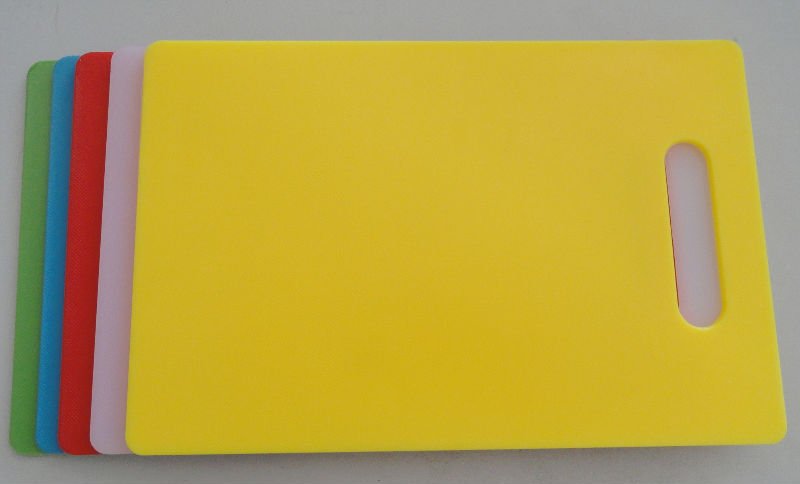
During your next time you're the one cutting vegetables against your cutting board, spend some time and look at it, the material most likely to be used as a HDPE Polyethylene Cutting Board - Sheets cutting board is Polyethylene. Given that it is normally FDA and National Sanitation Foundation approved in addition to stain, moisture and odor resistant, Polyethylene is the best choice for chopping boards.
Numerous cutting boards constructed from wood are vulnerable to bacteria and long term odors given that they lack the properties that Polyethylene sheets offer, for instance its non permeable work surface, chemical substance resistance and approval for food contact. High Density Polyethylene certainly a durable and lightweight material that comes in lots of forms and is ideal for a wide array of applications. There are several varieties of Polyethylene commercially available. The most common are HDPE (High Density Polyethylene), Low Density Polyethylene, and UHMW (Ultra High Molecular Weight Polyethylene). The key difference has to do with the molecular weight and branching; this occurs when a monomer or atom is replaced by a longer chain of polymers (an excessively long repeating chain of atoms).
{ |
|

 |
|
High Density is often used for the one gallon milk jugs and Tupperware style food containers. Low Density is often used for bottles as well as plastic sandwich bags. UHMW, which has higher molecular weight (2-6 million) which enables for an even transfer over the length of material which makes it stronger, rendering it able to be used for bearing uses due to its great wear resistance. Commonly utilized in the food processing and dairy industry, Ultra High Molecular Weight is a nice replacement for a great many other industrial materials together with great treatment for many wear issues. Each of these polymers are created from the same polyolefin plastics family, but all have certain properties that make them a little different. HDPE provides great chemical resistance, with higher impact strength and great energy absorption. Low Density has many of the same properties as High Density however it's not as dense at 9.15, as an alternative to HDPE which happens to be 9.34, in addition to being a softer material ( the one gallon coffee can lids). Additionally, it provides a lower tensile strength as well as greater, much easier formability.
UHMW is definitely a strong material which has great durability and low co-efficient of friction which make it an ideal for sliding applications. The best known material plastic material with a lower co-efficient of friction is Polytetrafluoroethylene - PTFE; which has a higher temperature and chemical resistance. UHMW Polyethylene is equipped with a lot of material offerings and properties, and these kinds of products include outstanding strength that may be worthwhile for a variety of applications. From the food industry to automotive, your home or the warehouse, whatever your Polyethylene needs are - High Density, Low Density or UHMW, Polyethylene is really a superb choice. E-mail us for more information on these or other plastic raw materials.


Comments
Post a Comment